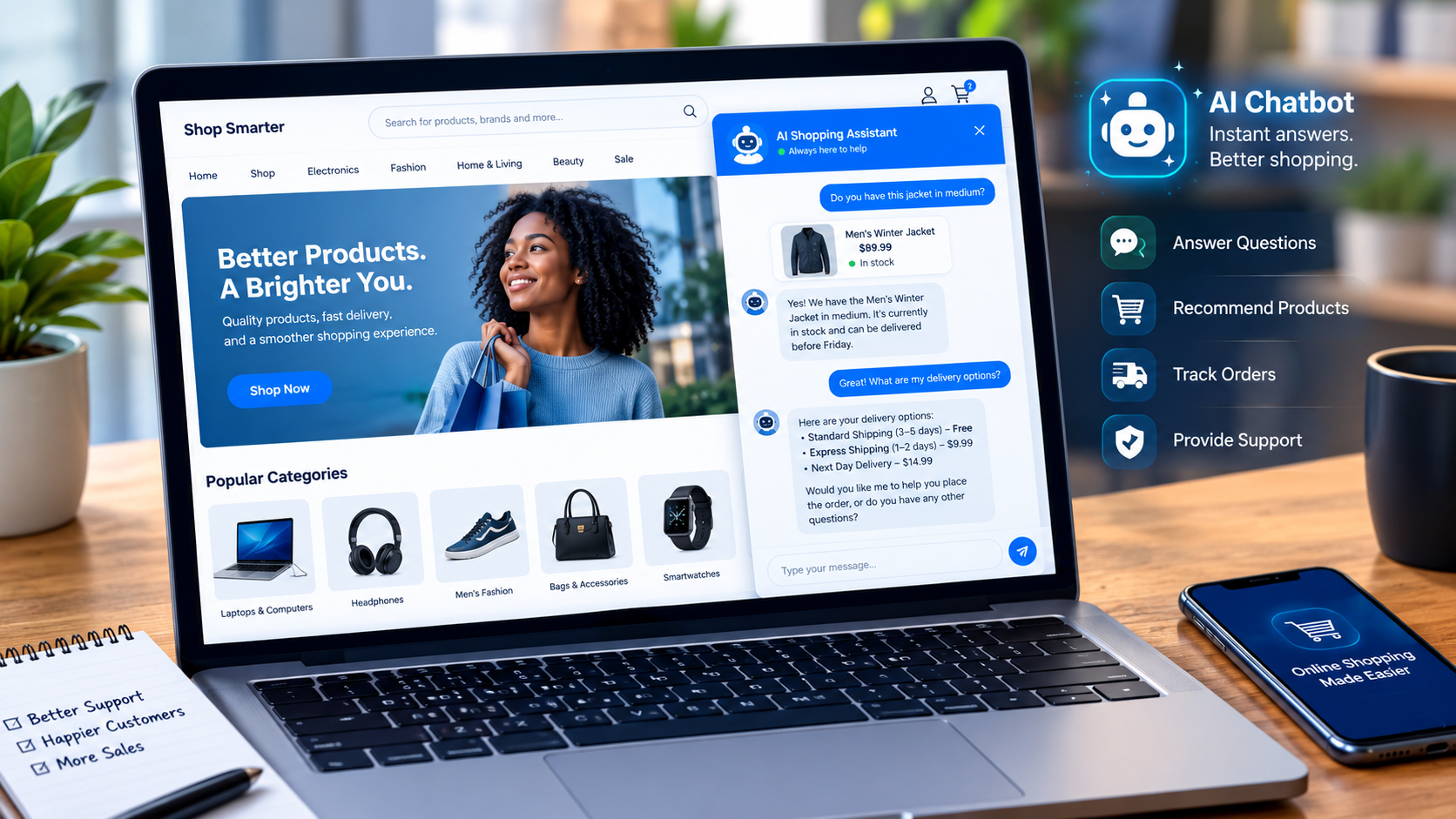
How AI Chatbots Work on an E-Commerce Website
Most modern AI shopping assistants follow a fairly simple process.
A customer asks a question, the system identifies what the shopper is trying to accomplish, retrieves relevant information and generates a response.
For instance:
“Do you have this jacket in medium, and can you deliver it before Friday?”
The chatbot may need to understand two separate requests: product availability and delivery information.
Depending on the integration, it can retrieve information from:
- Product databases
- Inventory systems
- Shipping platforms
- Frequently asked questions
- Store policies
- Customer-support knowledge bases
- Order-management systems
Modern AI chatbots can therefore go beyond simple predetermined buttons. However, their usefulness depends heavily on the quality and accuracy of the information they are connected to.
How to Choose an AI Chatbot for Your E-Commerce Website
Before choosing a chatbot platform, decide what you actually want the assistant to accomplish.
A small online store might only need automated answers to common questions. A larger retailer may need something capable of accessing customer orders, recommending products and transferring complicated cases to support agents.
Consider these factors:
1. AI chatbot e-commerce integrations
Check whether the chatbot connects with your existing e-commerce platform.
For example, Shopify provides native and third-party options, while other platforms may require plugins, APIs or custom development. Shopify also allows merchants to connect certain third-party AI tools while controlling the data and permissions those tools receive.
2. AI chatbot e-commerce knowledge base
Your chatbot needs reliable information to work from.
Prepare accurate details about:
- Products
- Prices
- Shipping
- Returns
- Refunds
- Warranty policies
- Payment options
- Frequently asked questions
If the information on your website is outdated, the chatbot can potentially make the customer experience worse rather than better.
3. AI chatbot e-commerce human handoff
Never assume every customer wants to communicate with AI.
Create an obvious route to human support for complaints, unusual requests, payment disputes, complicated returns and situations where the chatbot is uncertain.
Shopify’s current guidance also emphasizes configuring human handoff rather than expecting AI to handle every conversation.