Introduction
How to Integrate AI Chatbots Into an E-Commerce Website: Online shopping has become incredibly convenient, but one problem has remained surprisingly stubborn: customers still want answers before they buy.
They may want to know whether a product is available, how long delivery will take, whether an item can be returned, or which product is right for them. If they cannot find the answer quickly, there is a good chance they will simply leave.
This is where AI chatbots for e-commerce websites can make a meaningful difference.
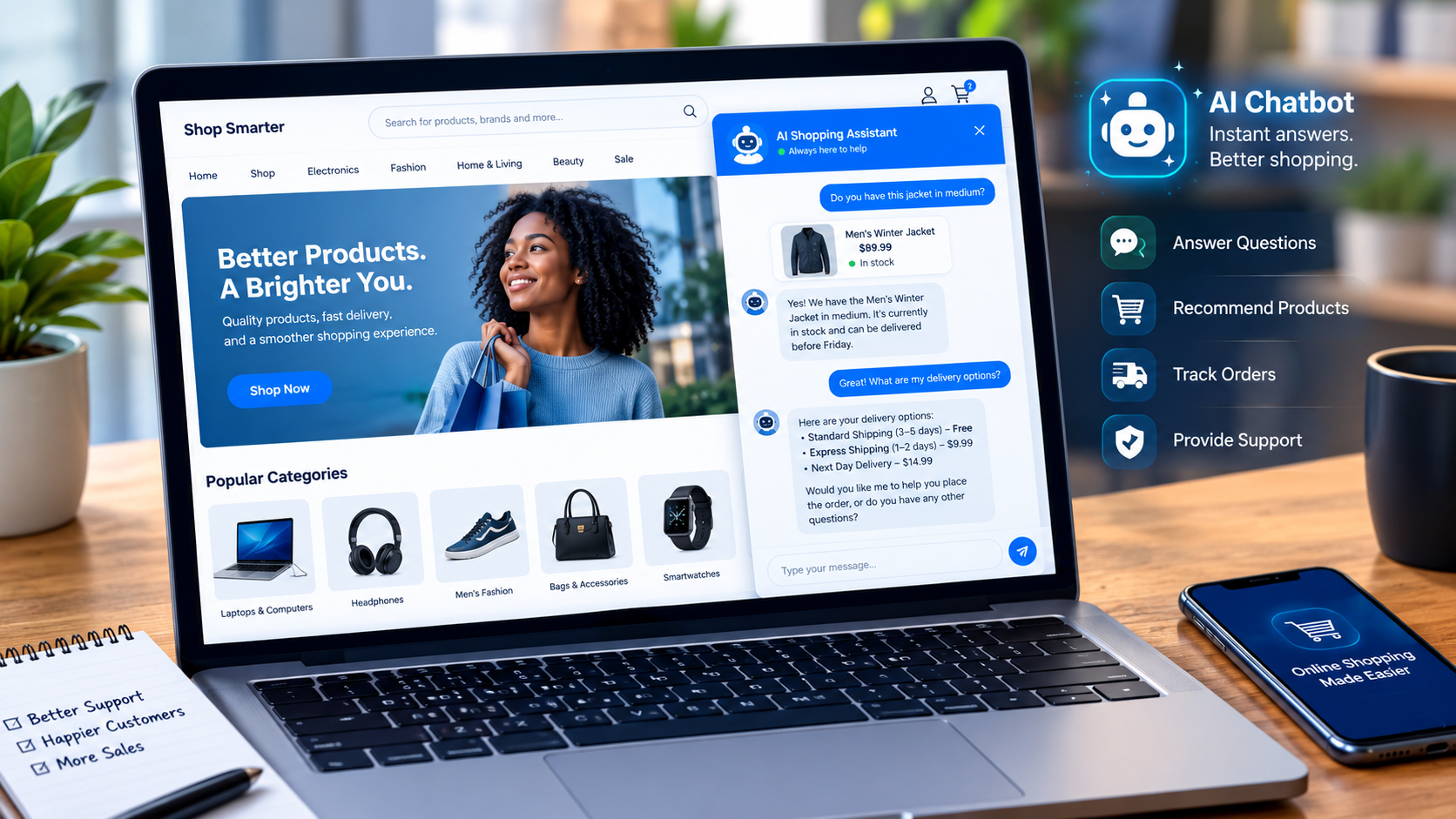
Unlike older chat widgets that mainly followed fixed scripts, modern AI-powered assistants can understand natural-language questions, use information from a store’s product catalogue or help centre, and respond conversationally. Some can also connect customers with human support when a request becomes too complicated.
Shopify, for example, currently supports AI-assisted customer conversations through tools such as Shopify Inbox, while its wider ecosystem also supports connections with third-party AI platforms.
But adding an AI chatbot is not simply a matter of placing a chat bubble on your homepage. The real value comes from integrating it with the right information, workflows and customer-service processes.
Why Integrate AI Chatbots Into an E-Commerce Website?
The biggest advantage of an AI chatbot is not that it “sounds human.” It is that it can reduce friction between a shopper’s question and the information they need.
A well-configured chatbot can help with:
- Product recommendations
- Frequently asked questions
- Order-status requests
- Shipping information
- Return and refund policies
- Product comparisons
- Basic troubleshooting
- Store opening hours and contact information
- Connecting customers with human support
For example, instead of forcing a customer to search through several pages for a return policy, the assistant can answer the question directly.
The important part is choosing tasks that are repetitive, easy to verify and genuinely useful to customers. Shopify similarly recommends identifying clear goals and starting with essential use cases rather than making a chatbot unnecessarily complicated. Shopify Inbox
My editorial take: The best chatbot is rarely the one with the most features. It is the one that solves the most annoying customer problems with the fewest unnecessary conversations.